Fireplace and smoke problems
Why is smoke coming into my house?
If smoke is filling a room, follow the box above before anything else. For brief smoke at start-up, or smoke that comes back in certain conditions, the checks below help narrow the cause.
Emergency first. Act on these before anything else on this page.
- Fire, flames, or a room filling with smoke: get everyone out of the home and call 911 or the fire department. If someone or a pet cannot get out, tell the operator or firefighters right away. Ready.gov: home fires.
- A carbon monoxide alarm sounds, or you suspect carbon monoxide poisoning: get outside to fresh air immediately, then call 911. Carbon monoxide is colorless and odorless, so you cannot smell it. CPSC: carbon monoxide.
- You smell gas: leave the building immediately. Do not try to find the source, and do not use light switches, phones, matches, appliances or a car near the building. Once you are at a safe distance, call your gas utility or 911. PSE&G tells customers to move at least 350 feet away and call 1-800-880-PSEG (7734) or 911. PSE&G: if you smell gas. Other utilities publish their own numbers.
The checks below are for a brief puff of smoke at start-up or smoke that returns in certain conditions, with no alarm and no sign of fire. Stop using the fireplace if the smoke stays.
Short answer. Smoke that stays in the room is not something to keep trying to fix with a fire burning. Stop using the fireplace and have it inspected. If the smoke is brief or comes only in certain conditions, check the damper, the air supply in the house and the cap, as set out below.
Checks for brief start-up smoke
- Is the damper fully open? A damper only partly open is a common cause. CSIA advises opening it fully before lighting any fire.
- Is the flue cold? A cold flue can reverse the draft at start-up.
- Does a cracked window help? If it does, the house may be short of air, often from tight windows or exhaust fans.
- Is the flue blocked? Nests, debris or heavy deposits narrow it.
- Is the cap clogged? A cap screen blocked with soot or debris restricts flow.
Do these only when the fire is out or there is no smoke, never while smoke is filling the room.
Pattern, likely cause and next step
| Pattern | Possible cause | Next step |
|---|---|---|
| Smoke filling the room, or any CO alarm | Emergency, not a draft question | Get out and call 911 or the fire department; for a CO alarm get outside to fresh air, then call 911 |
| Smoke the moment you light, then it clears | Cold flue or closed damper | Open damper, warm the flue first |
| Better with a window open | House under negative pressure | Provide makeup air; diagnose airflow |
| Smoke when an exhaust fan or dryer runs | Competing exhaust pulling air down the chimney | Test with fans off; discuss makeup air |
| Smoke when another fireplace is lit | Air drawn down an unused flue | CSIA suggests makeup air or a top-mounted damper on the unused fireplace |
| Smoke every time, even after the checks above | Blockage, damaged flue, smoke chamber, undersized flue | Stop using; inspection |
| Worse on windy days | Wind pushing down the flue; cap or chimney height | Inspection of the top |
| Started after a change to the house or heating | New pressure conditions, replaced appliance | Inspect the whole system |
Tight houses and negative pressure
An airtight house can draw air from wherever it can find it, including down a chimney. CSIA notes that airtight homes create negative pressure and that an unused flue may then pull smoke from a fireplace in use. Bathroom fans, kitchen hoods, dryers and combustion appliances all take air out of the house. When the supply of replacement air is limited, the chimney becomes the easiest way in.
Why a rough smoke chamber matters
Above the damper, the smoke chamber shapes the airflow into the flue. A rough, cracked or poorly shaped chamber can disturb the draft. See the smoke chamber, explained.
Common misconceptions
"My chimney must be blocked." Often it is not. A cold flue and a starved house cause many cases.
"A taller chimney will fix it." Only if height is the cause, which is less common than people expect.
"A little smoke is normal." A brief puff at start-up can be. Smoke that stays in the room is not.
Alarms and what to do
Smoke and carbon monoxide alarms are what tell you something is wrong when you cannot see it. CPSC recommends battery-operated CO alarms, or alarms with battery backup, on every level of the home and outside sleeping areas. Follow the emergency steps at the top of this page for fire, a sounding CO alarm or a gas smell.
Sources
- Ready.gov, what to do during a home fire
- CPSC, carbon monoxide information center
- PSE&G, if you smell gas
- CSIA, preventing chimney fires
- CSIA, homeowner FAQs: damper position and smoke from an unused fireplace
About this guide. Published by Dr. Sweeper as general homeowner education, last updated October 1, 2026. Sources are linked where they are cited. What applies to your home can depend on your local building code, your appliance and its manufacturer's instructions, and the actual condition of your chimney, so this guide is not a substitute for an inspection.
If you need help
Related services
Chimney inspection
A condition check of the chimney system.
Learn moreChimney sweep
Cleaning of the flue and firebox.
Learn moreSmoke chamber repair
Parging and repair above the firebox.
Learn moreChimney caps
Rain and animal protection at the flue top.
Learn moreSmoking Fireplace
When smoke comes into the room.
Learn moreDamper Repair
Sticking or leaking dampers.
Learn moreOur work
Related project work

Smoke Chamber Repair and HeatShield in Atlantic City, NJ
Atlantic City, NJ · Smoke chamber repair, HeatShield flue repair
Smoke chamber repair and HeatShield flue repair in Atlantic City.
Read the project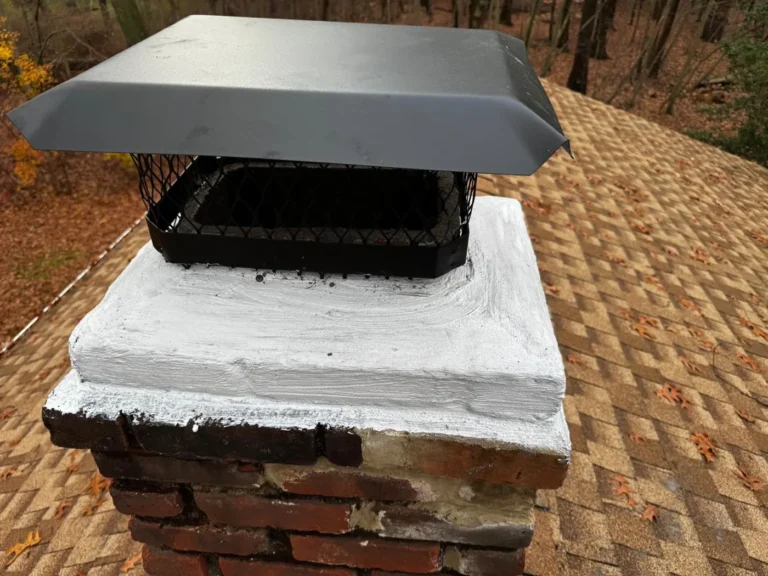
Crown Repair, Chimney Cap and Smoke Chamber Work in East Windsor, NJ
East Windsor, NJ · Crown repair, chimney cap, smoke chamber repair
Crown, cap and smoke chamber work on an East Windsor chimney.
Read the projectQuestions
Frequently asked questions
Why does it only smoke some of the time?
Weather, flue temperature and air pressure in the house all change. Intermittent smoke usually points to conditions rather than a fault, but smoke that stays in the room does not.
Can a damper cause smoke?
Yes, if it is closed, partly open or damaged. See the damper guide.
Is smoke in the house dangerous?
It can be. If smoke fills a room or an alarm sounds, follow the emergency steps at the top of this page. Carbon monoxide cannot be seen or smelled, so alarms matter.
When should I call for an inspection?
Once everyone is safe and there is no emergency: if checking the damper and the air supply do not help, or smoke has happened more than once, have it inspected before using the fireplace again.
Ready to have your chimney looked at?
Call us, or send a scheduling request. We will contact you to confirm a time. Your appointment is not confirmed until we do.