Chimney Chase Covers in New Jersey
If your chimney is a framed enclosure covered in siding, its top is a metal chase cover. When it rusts, sags or leaks, water runs into the framing and down toward the fireplace.
What a chase cover is
Many fireplaces are built with a factory-made metal flue pipe inside a wood-framed box, called a chase, covered with siding, brick veneer or stucco. The chase cover is the sheet-metal lid on top of that box. It keeps rain out of the framing, and the flue pipe passes up through it.
Chase covers are different from chimney caps. The cap covers the flue opening, and the chase cover covers the whole top of the enclosure.
Signs the chase cover has failed
- Rust, especially around seams and edges
- Water pooling on top, or a sagging or dented lid
- Water stains on the outside of the chase or on ceilings near it
- Soft, discolored or rotting wood at the top of the chase
- Rust or water in the firebox or on the fireplace unit
- Visible gaps around the flue pipe
Why they fail
Many chase covers are made from thin galvanized steel with seams that are only sealed with caulk. Over time the metal rusts, the seams open and the lid can sag so water collects instead of running off. Once water gets into the framing, it can cause rot and mold, and it can rust the fireplace unit itself.
What a good replacement has
- A custom fit to the chase, measured on site
- A slope so water runs off, either pitched or crowned
- An overhang with a drip edge, so water does not run down the siding
- Seams that are folded or welded and not left to caulk alone
- A proper seal and storm collar where the flue pipe comes through
Material choices
| Material | Considerations |
|---|---|
| Galvanized steel | Lowest cost, and the coating can wear and rust sooner |
| Stainless steel | Resists rust, and is a common choice for a longer-lasting cover |
| Copper | Long-lasting and distinctive, at a higher cost |
Because rot can hide beneath a failed cover, we look at the framing under it before the new cover goes on.
What the work involves
Replacing a chase cover
- InspectWe check the cover, the framing under it and the flue pipe.
- MeasureThe cover is made to fit your chase.
- ReplaceThe old cover comes off, any damage is addressed, and the new one is installed and sealed.
Our work
Recent chase covers projects
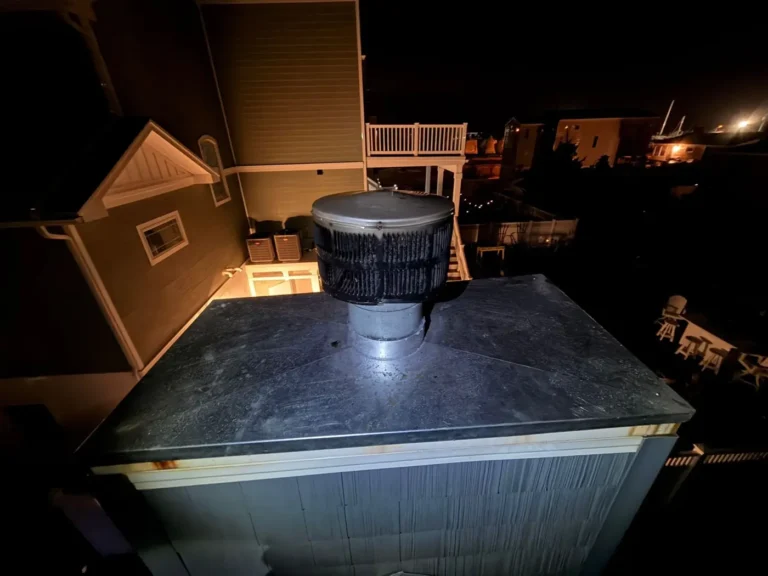
Chase Cover Installation in Beach Haven, NJ
Beach Haven, NJ · Chase cover installation
A new chase cover installed on a Beach Haven chimney.
Read the projectRelated services
Chimney Caps
Cover the flue opening itself.
Learn moreChimney Flashing Repair
Where a chimney meets a roof, flashing keeps water out.
Learn moreChimney Inspection
Check for water damage in and around the chase.
Learn moreWe work throughout New Jersey. See our service areas, or browse all services.
Questions
Frequently asked questions
How do I know I have a chase cover and not a masonry chimney?
A chase is a framed box, usually covered in siding or veneer, with a sheet-metal lid. A masonry chimney is made of brick or stone and has a concrete or mortar crown.
Can a chase cover be repaired, or does it need to be replaced?
Small problems can sometimes be sealed. If the metal is rusted, sagging or the seams have failed, replacing the cover is more reliable.
What happens if I ignore a leaking chase cover?
Water can rot the framing and rust the fireplace unit. The longer it leaks, the more there is to repair.
Does a chase cover come with a cap?
The cover goes on the chase, and the cap goes on the flue pipe. They are separate parts, and both need to be in good condition.
Chimney Academy
Guides that go with this page
Ready to have your chimney looked at?
Call us, or send a scheduling request. We will contact you to confirm a time. Your appointment is not confirmed until we do.