Fireplace and smoke problems
Why does my fireplace smell?
A fireplace smell is information. The kind of smell, and when it comes, narrows the cause before anyone climbs on the roof.
Emergency first. Act on these before anything else on this page.
- Fire, flames, or a room filling with smoke: get everyone out of the home and call 911 or the fire department. If someone or a pet cannot get out, tell the operator or firefighters right away. Ready.gov: home fires.
- A carbon monoxide alarm sounds, or you suspect carbon monoxide poisoning: get outside to fresh air immediately, then call 911. Carbon monoxide is colorless and odorless, so you cannot smell it. CPSC: carbon monoxide.
- You smell gas: leave the building immediately. Do not try to find the source, and do not use light switches, phones, matches, appliances or a car near the building. Once you are at a safe distance, call your gas utility or 911. PSE&G tells customers to move at least 350 feet away and call 1-800-880-PSEG (7734) or 911. PSE&G: if you smell gas. Other utilities publish their own numbers.
Everything below is for routine odors in a fireplace that is not producing smoke, an alarm or a gas smell. Booking a visit is for after any emergency is handled.
Short answer. A smoky or tarry smell, stronger in humid weather, usually means creosote or soot in the flue. A damp, musty smell points to water entering the chimney. A sharp or rotten smell often means an animal or nest. A sweep, a cap or a water-source fix addresses each.
Match the smell to the cause
| Smell or sign | Likely cause | Next step |
|---|---|---|
| Gas smell, from a gas unit or anywhere in the house | Possible gas leak. This is an emergency. | Do not use switches, phones or flames inside. Leave, then call your gas utility or 911 from a safe distance |
| Visible smoke, or a burning smell you cannot trace | Possible fire. This is an emergency. | Get out of the home and call 911 or the fire department |
| A carbon monoxide alarm is sounding | Possible carbon monoxide. This is an emergency. | Get outside to fresh air, then call 911 |
| Smoky or tarry, worse in humid weather | Creosote or soot deposits | Sweep; review burning habits |
| Damp, musty, like wet ash | Water entering the flue or masonry | Trace the water; cap or crown repair |
| Sharp, rotten or animal | Animal or nest in the flue | Inspection and cap; do not light a fire |
| Outdoor or smoky smells drawn indoors | Downdraft from a poor draft balance | Diagnosis of airflow |
| Burned plastic or paint, with no visible smoke | Something burned that should not have been | Stop using the fireplace; ventilate; if you cannot find the source or any smoke appears, treat it as the fire row above |
The first three rows are emergencies and are not routine. Act on the box at the top first. The rows below them are routine odors that a visit can sort out, as long as there is no smoke, alarm or gas smell.
Why it gets worse in summer
Humid air carries the odor of creosote into the room. Air conditioning can also pull air down an open flue, and with it the smell of what is in there. Warm weather also wakes up animals and speeds the growth of mold in damp ash. A cap and a damper that actually closes reduce all three. See why is my damper not working?.
Questions that narrow it down
- When does it happen? Humid days point to deposits. After rain points to water.
- Does it come with a sound? Scratching or chirping points to animals.
- Is it present with the damper closed? If it goes away, the odor is coming down the flue. If not, check the firebox and the ash.
- Has anything changed? New exhaust fans, a new appliance or recent roof work can change how air moves.
- When was the last sweep? A long gap and a tarry smell go together.
What to do
- Clean out cooled ash and wipe the firebox; damp ash alone can smell.
- Close the damper when not in use, if it seals.
- Have the flue swept and inspected. See what is creosote?.
- Make sure the top is covered. See chimney cap vs. chase cover.
- Do not light a fire if you suspect an animal.
What does not work
Air fresheners and scented products mask the smell without changing the cause. Cleaning the firebox alone helps only if the smell is coming from the firebox. A smell that returns each humid season usually means deposits are still in the flue.
Common misconceptions
"It is just an old fireplace." Age does not smell. Deposits, water and animals do.
"The smell means it is unsafe." It can mean a flue needs cleaning. A smell alone does not tell you the flue is damaged.
"It will go away in winter." It usually fades when the weather turns dry, and returns.
Sources
- Ready.gov, what to do during a home fire
- CPSC, carbon monoxide information center
- PSE&G, if you smell gas
- CSIA, preventing chimney fires
About this guide. Published by Dr. Sweeper as general homeowner education, last updated October 1, 2026. Sources are linked where they are cited. What applies to your home can depend on your local building code, your appliance and its manufacturer's instructions, and the actual condition of your chimney, so this guide is not a substitute for an inspection.
If you need help
Related services
Chimney sweep
Cleaning of the flue and firebox.
Learn moreChimney inspection
A condition check of the chimney system.
Learn moreChimney caps
Rain and animal protection at the flue top.
Learn moreChimney dampers
Damper and cap damper repair or replacement.
Learn moreFireplace Cleaning
From the firebox up through the flue.
Learn moreFireplace Inspection
Firebox, damper, hearth and smoke chamber.
Learn moreOur work
Related project work
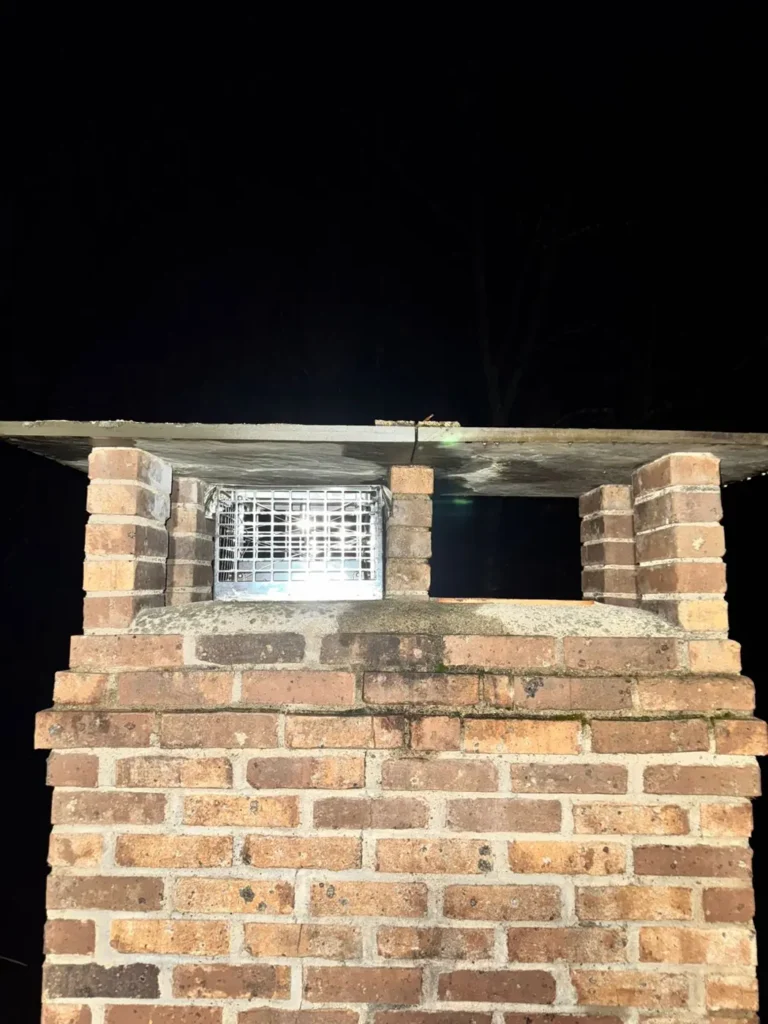
Damper Cap Installation and Two Fireplace Cleanings in Wanaque, NJ
Wanaque, NJ · Damper cap installation, fireplace cleaning
A damper cap installed and two fireplaces cleaned in Wanaque.
Read the project
Firebox Panel Replacement and Chimney Sweep in Denville, NJ
Denville, NJ · Firebox panel replacement, chimney sweep
A replacement firebox panel and chimney sweeping in Denville.
Read the projectQuestions
Frequently asked questions
Can a chimney smell make me sick?
Strong mold or animal odors are unpleasant and worth fixing. Carbon monoxide cannot be smelled, so working CO alarms matter. If one sounds, get outside to fresh air and call 911.
Will a sweep remove the smell?
If deposits are the cause, it usually helps a great deal.
What if I smell gas?
Do not use switches, phones, matches or appliances inside. Leave the building and call your gas utility or 911 from a safe distance. Do not wait for an appointment.
Is a smell worse with a wood stove?
Stoves with smaller flues often hold more deposit. Check them more often.
Ready to have your chimney looked at?
Call us, or send a scheduling request. We will contact you to confirm a time. Your appointment is not confirmed until we do.