Chimney Cap Replacement and Installation
A chimney cap that is rusted through, bent, loose or missing is no longer doing its job. Replacing or fitting one is one of the least expensive ways to protect the flue.
When a cap needs replacing
- It is missing, or it blew off in a storm
- It is rusted through or the mesh is falling apart
- It is bent, crushed or loose
- It does not fit the flue, so there are gaps
- Animals have chewed through it, or are getting around it
- The flue has never had one
A quick look from the ground often shows it. For a general explanation of caps, see chimney caps. This page is about the replacement itself.
What a replacement involves
We start by seeing what is there: the type of flue, the number of flues, how the old cap was attached and what shape the top of the chimney is in. A cap is only as good as what it fixes to, so if the crown or flue tile is cracked, that is dealt with first or at the same time. We then measure, recommend a cap that fits, and secure it so wind does not move it.
Choosing a replacement
| Consideration | What to know |
|---|---|
| Fit | A cap has to fit the flue tile or pipe. A cap that is too small or too large does not seal well. |
| Material | Stainless steel resists rust well. Galvanized steel costs less and wears faster. Copper is long-lasting and changes color with age. |
| Mesh | The openings keep animals and sparks out. Appliance requirements may limit what is suitable. |
| Single or multiple flues | A chimney with several flues may call for a cap covering all of them. |
| Appearance | Caps are visible. The style and finish matter to many homeowners. |
Cap or damper?
A top-sealing damper sits at the top of the flue and acts as a cap too, with a seal that closes when the fireplace is not in use. It can replace both an old cap and a failing damper. We explain when that makes sense.
A new cap does not fix a damaged crown. If the slab around the flue is cracked, we recommend repairing it along with the cap.
What the work involves
How a replacement goes
- ExamineWe check the cap, the flue and the crown.
- MeasureWe measure the flue to find a cap that fits.
- InstallThe new cap is fitted and secured.
- ConfirmWe check that it is firm and tell you what we did.
Our work
Recent chimney cap work

Liner Installation, Two Crown Repairs and Two Chimney Caps in North Brunswick Township, NJ
North Brunswick Township, NJ · Chimney liner, two crown repairs, two chimney caps
A multi-part chimney project: liner, two crowns and two caps.
Read the project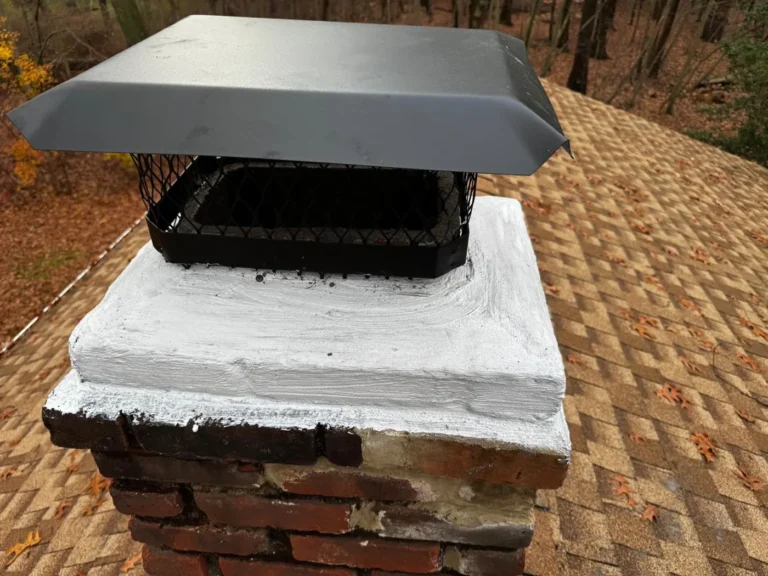
Crown Repair, Chimney Cap and Smoke Chamber Work in East Windsor, NJ
East Windsor, NJ · Crown repair, chimney cap, smoke chamber repair
Crown, cap and smoke chamber work on an East Windsor chimney.
Read the projectRelated services
Chimney Caps
What a cap is and why it matters.
Learn moreChimney Crown Repair
Repair the slab the cap sits on.
Learn moreTop-Sealing Damper Installation
A cap and a damper in one.
Learn moreAnimal and Nest Removal
Clear what moved in and keep it out.
Learn moreWe work throughout New Jersey. See our service areas, or browse all services.
Questions
Frequently asked questions
How long does a cap last?
It depends on the material and the weather. Stainless steel lasts longest. We discuss the options and their trade-offs.
Is a cap a spark arrestor?
Many caps include mesh that works as one, but not all. We confirm what suits your chimney.
Can a cap stop animals completely?
A properly fitted cap with suitable mesh blocks most. If an animal is already inside, that is a separate problem.
Do I need a cap if I have a gas fireplace?
A cap is still recommended to keep out rain and debris. We confirm what fits your appliance.
Ready to have your chimney looked at?
Call us, or send a scheduling request. We will contact you to confirm a time. Your appointment is not confirmed until we do.