Sweeping and maintenance
Choosing and storing firewood
Dry wood burns hotter and cleaner. Wet wood smolders, smokes and leaves more deposit in the flue.
Short answer. Burn wood that has been split and seasoned for at least six months and tests under 20 percent moisture. Stack it off the ground, cover only the top so air can move through the sides, and burn only untreated natural wood.
How to tell if wood is dry
| Check | Seasoned wood | Wet or green wood |
|---|---|---|
| Moisture meter reading | Under 20 percent | Well above 20 percent |
| End grain | Darker, with cracks radiating from the center | Light, tight, no cracks |
| Weight | Light for its size | Heavy, feels damp |
| Sound | Hollow knock when two pieces are struck | Dull thud |
| In the fire | Lights readily, burns with a clear flame | Hisses, sizzles, smokes, struggles to stay lit |
A moisture meter is the only reliable test, and it is inexpensive. Split a piece, then measure on the freshly split face rather than the outside.
Seasoning and storage
- Split it. Whole rounds dry very slowly because moisture escapes mainly through cut ends and split faces.
- Allow time. EPA guidance says to season wood for at least six months. Dense hardwoods can take longer.
- Stack off the ground on pallets or rails so air moves underneath and the bottom row stays out of the damp.
- Cover only the top. A cover over the pile keeps rain and snow off while the open sides let moisture leave. Wrapping the whole stack in plastic traps it.
- Keep it away from the house wall. Allowing air space helps, and a stack against the building invites pests to the wall.
- Bring in only a few days of wood so it can come to room temperature before it is burned.
Why it matters for the chimney
Wet wood spends energy boiling off water, so the fire runs cooler. Cooler smoke carries more unburned material, and as it rises through a cooler flue it condenses and sticks as creosote. That is why wet wood is linked to heavier deposits and a smokier fire. See what is creosote? for how those deposits form and why they matter.
What not to burn
- Painted, stained or pressure-treated wood and plywood or particleboard offcuts.
- Trash, cardboard, wrapping paper and plastics.
- Accelerants such as gasoline or lighter fluid. Use kindling and a proper fire starter.
- Anything that is not natural, untreated firewood.
Burning habits that help
- Build a small hot fire rather than a large smoldering one.
- Open the damper fully before lighting, and keep it open until the fire is out.
- Keep the air supply open enough for the fire to burn actively.
- Do not let the fire smolder overnight.
- Clean out ash into a metal container and keep it away from the house.
Common misconceptions
"Dry-looking wood is dry." Wood can look fine and still be wet inside. Measure.
"Hardwood needs no seasoning." Hardwood often takes longer to dry than softwood.
"Burning hot all at once cleans the chimney." It does not remove deposits that are already there. A sweep does.
"Store it right by the fireplace all winter." A small supply indoors is fine. A large stack brings dust and insects inside.
See also
A fire that smokes into the room may have a draft cause rather than a wood cause: smoke coming into the house. For how often to have the flue checked, see how often to sweep a chimney.
Sources
About this guide. Published by Dr. Sweeper as general homeowner education, last updated October 1, 2026. Sources are linked where they are cited. What applies to your home can depend on your local building code, your appliance and its manufacturer's instructions, and the actual condition of your chimney, so this guide is not a substitute for an inspection.
If you need help
Related services
Chimney sweep
Cleaning of the flue and firebox.
Learn moreChimney inspection
A condition check of the chimney system.
Learn moreChimney caps
Rain and animal protection at the flue top.
Learn moreSmoking Fireplace
When smoke comes into the room.
Learn moreChimney Maintenance
A simple yearly routine.
Learn moreWood Stove Service
Cleaning, inspection and installation for stoves.
Learn moreOur work
Related project work
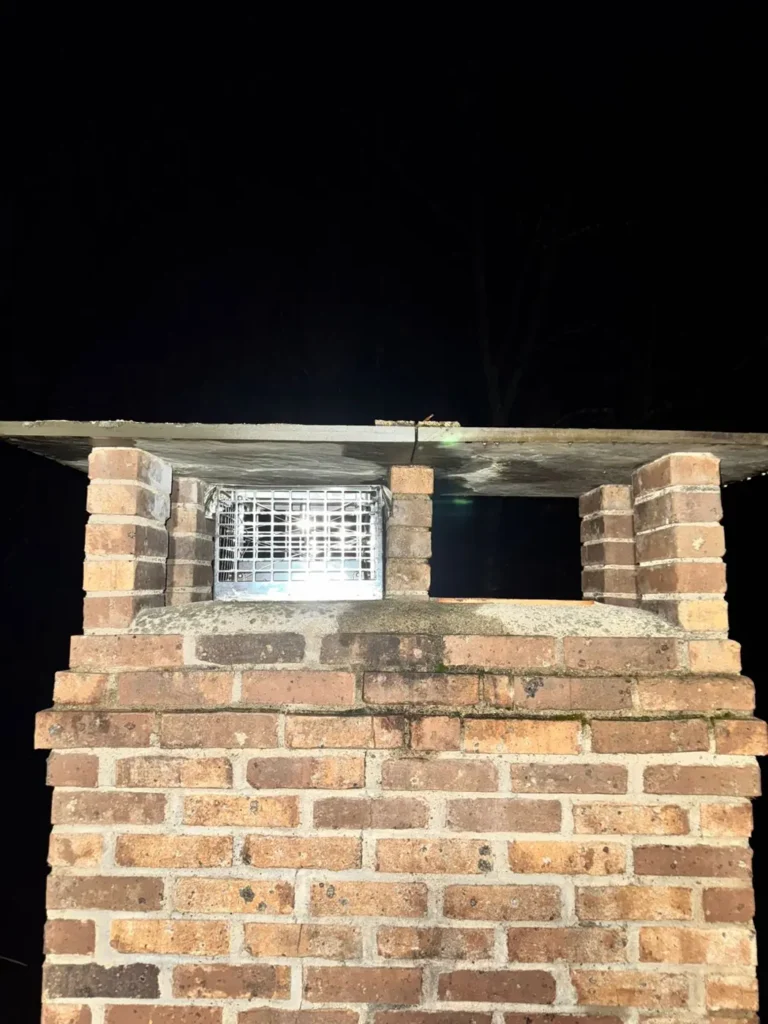
Damper Cap Installation and Two Fireplace Cleanings in Wanaque, NJ
Wanaque, NJ · Damper cap installation, fireplace cleaning
A damper cap installed and two fireplaces cleaned in Wanaque.
Read the project
Firebox Panel Replacement and Chimney Sweep in Denville, NJ
Denville, NJ · Firebox panel replacement, chimney sweep
A replacement firebox panel and chimney sweeping in Denville.
Read the projectQuestions
Frequently asked questions
How long should firewood season?
EPA guidance says at least six months, and longer for dense hardwoods. Check with a moisture meter rather than counting months.
Can I burn wood straight from a fallen tree?
Not right away. Freshly cut wood is wet and needs to be split and seasoned first.
Is a firewood rack by the fireplace okay?
A few days of wood indoors is fine. Keep larger supplies outside, off the ground and covered on top.
Do fire logs or pellets replace the need for a sweep?
No. Any solid fuel leaves residue, so the flue still needs periodic checking.
Not sure what your flue looks like?
Call or book a visit and we will tell you what we find.