Fireplace Cleaning
A clean fireplace is more than a swept firebox. Soot and creosote build up in the smoke chamber and flue, where you cannot see them, and they cause the odors and fires that cleaning is meant to prevent.
Fireplace cleaning and chimney sweeping
They are the same job seen from two ends. Cleaning the fireplace includes the firebox and damper, and the smoke chamber and flue above them. For the full picture of how sweeping works, see chimney sweep and cleaning. This page is for people who think about the problem at the fireplace: the smell, the soot on the glass or the mess on the hearth.
What gets cleaned
- The firebox, including ash and loose debris
- The damper and the ledge behind it, where soot and debris collect
- The smoke chamber above the damper
- The flue, from the firebox to the top
- The hearth and nearby surfaces we may have touched, so the room is left tidy
Signs yours is due
- A smoky or sooty smell, especially on humid days
- Soot falling into the firebox or on the damper
- Black, glossy or crusty deposits on the flue wall that you can see
- Smoke that does not rise as it used to
- You have burned more than a season or two since the last cleaning
- You do not know when it was last done
Ash and what you can do yourself
Removing ash is fine to do yourself. Let it cool completely, shovel it into a metal container and store it outside, away from the house. A little ash on the floor of the firebox is fine, but a deep bed holds moisture against the metal and brick. That does nothing to the deposits higher up, which need a sweep.
What cleaning cannot fix
A sweep removes deposits. It does not repair cracked tile, a rusted damper or a leaking crown. If we see damage while cleaning, we tell you what it is and what the options are, and leave the decision to you. For a closer look at the fireplace itself, see fireplace inspection.
Burning dry, seasoned wood is the best way to keep a fireplace clean between visits. Wet wood makes more smoke, which leaves more creosote.
What the work involves
How a cleaning goes
- ProtectWe cover the floor and keep the work contained.
- CleanWe remove deposits from the firebox up through the flue.
- CheckWe look at what the cleaning uncovers.
- TidyWe leave the fireplace and the room clean.
Our work
Recent fireplace cleaning projects
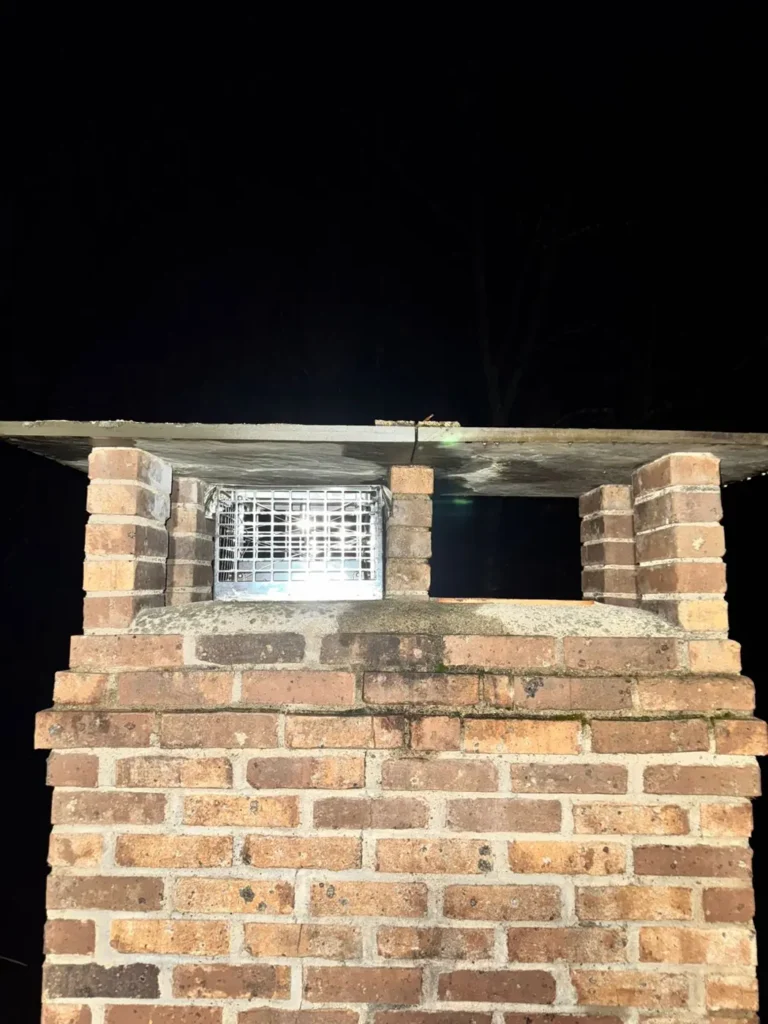
Damper Cap Installation and Two Fireplace Cleanings in Wanaque, NJ
Wanaque, NJ · Damper cap installation, fireplace cleaning
A damper cap installed and two fireplaces cleaned in Wanaque.
Read the projectRelated services
Chimney Sweep & Cleaning
The full service.
Learn moreChimney Inspection
Look at condition as well as cleanliness.
Learn moreChimney Maintenance
A yearly routine.
Learn moreWe work throughout New Jersey. See our service areas, or browse all services.
Questions
Frequently asked questions
How often should a fireplace be cleaned?
It depends on how much it is used and what is burned. See how often to sweep. NFPA 211 calls for yearly inspection, and cleaning follows what the inspection finds.
Does cleaning remove the smell?
Often it helps a lot, because deposits cause the smell. If the odor continues, the cause may be water or a draft problem. See our guide.
Is a vacuum or a brush enough?
A vacuum helps in the firebox. It cannot reach the flue, where the deposits that matter collect.
Can I clean the glass doors myself?
Yes. Use a cleaner made for fireplace glass, only when it is cold.
Ready to have your chimney looked at?
Call us, or send a scheduling request. We will contact you to confirm a time. Your appointment is not confirmed until we do.