Sweeping and maintenance
How often should a chimney be swept?
There is no single number that fits every chimney. The rule that holds up is to inspect every year and clean when the inspection says so.
Short answer. NFPA 211 calls for chimneys, fireplaces and vents to be inspected at least once a year. Sweeping follows from what the inspection finds: CSIA advises cleaning a masonry fireplace chimney when soot buildup reaches about one eighth of an inch, and sooner if glazed creosote is present.
What the guidance says
The Chimney Safety Institute of America (CSIA) cites NFPA 211 as requiring an annual inspection to assess the structure, the deposits in the flue and the clearances. CSIA adds that this applies even to a chimney that is hardly used, because animals can nest in the flue and other deterioration can occur. For sweeping it gives two thresholds. A masonry fireplace chimney should be swept when sooty buildup reaches about 1/8 inch, or sooner if glazed creosote is present. A factory-built fireplace should be swept when any appreciable buildup occurs, because the deposits in these systems are acidic and can corrode components.
What changes the answer
| Situation | Why it matters | Practical approach |
|---|---|---|
| Burning often through the season | More fires, more deposit | Inspect yearly; expect to sweep more often |
| Burning damp or unseasoned wood | Smolders, cools the flue, leaves more creosote | Fix the wood first; then see how fast deposits return |
| Fire starved of air (stove damped down, glass doors closed) | Cool, smoky burn | Burn hotter; sweep as inspection shows |
| Rarely used fireplace | Little deposit, but debris and nests still collect | Annual look; sweep only if needed |
| Wood stove or insert | Smaller flue and cooler exhaust load up faster | Check more often during the season |
| Factory-built fireplace | Acidic deposits can corrode metal parts | Sweep at any appreciable buildup |
| Gas appliance vented through a chimney or flue | No creosote, but nests, debris and moisture damage can block or damage the flue | Annual inspection of the flue. Direct-vent and unvented units are serviced as the manufacturer directs |
A simple routine
- Have the chimney inspected once a year, before the season you use it.
- Have it swept when the inspection or your own signs call for it.
- Burn seasoned wood; see choosing and storing firewood.
- Note anything that changes between visits: smell, smoke, draft, sound.
If you are unsure what you have, signs your chimney needs cleaning lists what to look for between visits.
Why "once a year" is not the whole story
Two homes can burn the same amount of wood and need different attention. A well-drawing, properly sized flue burning dry wood hot leaves little behind. An oversized flue, wet wood or a smoldering fire can build deposits in a single season. That is why the standard puts the inspection first and the sweep second: the inspection is how you learn which of those you have.
Common misconceptions
"It has to be swept every year." The standard asks for an inspection every year. Sweeping depends on what is found.
"If I do not use it, I do not need to bother." Nests, debris and water damage do not depend on use.
"Cleaning logs replace sweeping." We do not make claims for products we cannot verify. A log does not remove glazed creosote or show you the condition of the flue.
"A clean fireplace means a clean chimney." The firebox is the part you can see. The flue is the part that matters.
When to book sooner
Book a visit before the next fire if you notice a strong tarry smell, dark glossy deposits on the flue walls, smoke spilling into the room, or a fire that burns badly. If you have had a chimney fire, see after a chimney fire.
Sources
About this guide. Published by Dr. Sweeper as general homeowner education, last updated October 1, 2026. Sources are linked where they are cited. What applies to your home can depend on your local building code, your appliance and its manufacturer's instructions, and the actual condition of your chimney, so this guide is not a substitute for an inspection.
If you need help
Related services
Our work
Related project work
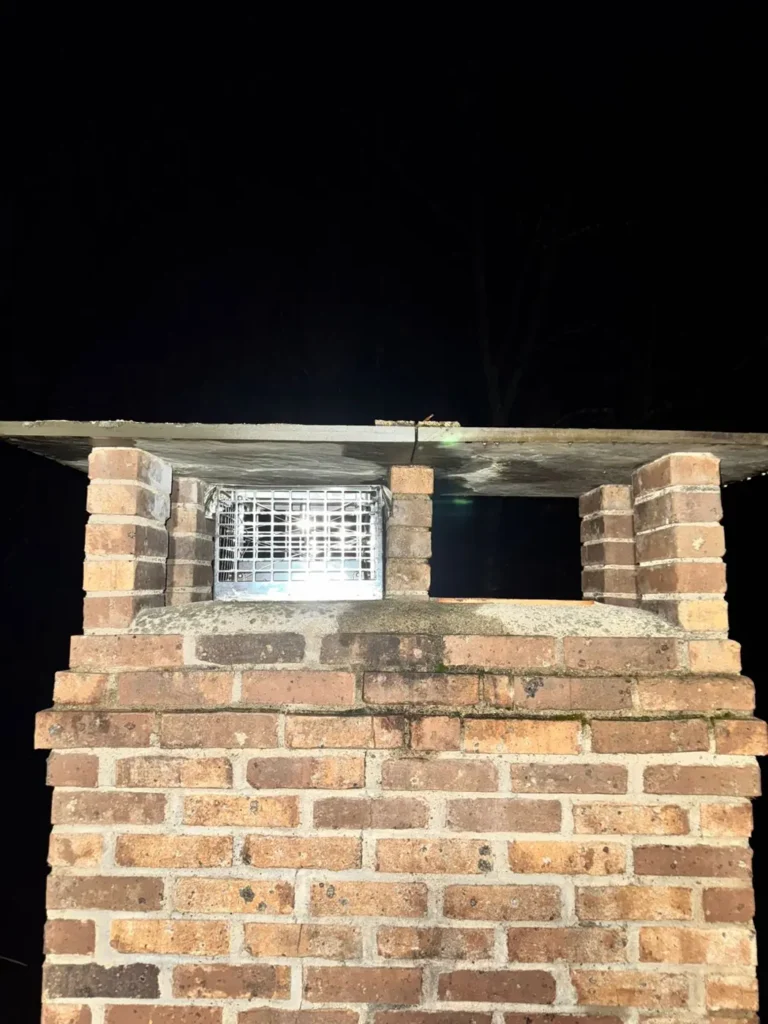
Damper Cap Installation and Two Fireplace Cleanings in Wanaque, NJ
Wanaque, NJ · Damper cap installation, fireplace cleaning
A damper cap installed and two fireplaces cleaned in Wanaque.
Read the project
Firebox Panel Replacement and Chimney Sweep in Denville, NJ
Denville, NJ · Firebox panel replacement, chimney sweep
A replacement firebox panel and chimney sweeping in Denville.
Read the projectQuestions
Frequently asked questions
I only light the fireplace a few times a year. Do I need a sweep?
Maybe not every year. A yearly inspection will show whether there is enough deposit to justify one.
How do I tell how much deposit there is?
Looking at the flue walls shows the type and thickness. The one-eighth-inch figure is CSIA's sweeping threshold for masonry fireplace chimneys.
Does sweeping prevent chimney fires?
Removing deposits reduces fuel for a chimney fire. It does not repair a damaged flue.
Does a gas fireplace need a sweep?
A gas fireplace does not form creosote, so sweeping is not the point. If it vents into a chimney or flue, CSIA advises annual inspection because debris and nests can block the flue. Direct-vent and unvented units do not use a chimney, so their burner and venting are serviced as the manufacturer directs.
Ready to have your chimney looked at?
Call us, or send a scheduling request. We will contact you to confirm a time. Your appointment is not confirmed until we do.