Masonry
Why is my chimney crown cracked?
The crown is the first line of defense against water. A hairline crack and a failing crown look similar from the ground and are very different problems.
Short answer. The crown is the slab at the top of the chimney that sheds water off the masonry. It cracks from weathering, from movement as the flue tile heats and cools, and from poor original construction. Whether a crack is minor cannot be judged reliably from the ground. Hairline cracks can sometimes be sealed, while wide, deep or crumbling crowns usually need rebuilding.
What the crown does
The crown spans the top of the chimney around the flue. It should slope away from the flue and extend past the chimney walls, so water drips clear rather than running down the brick. A crown made of plain mortar, rather than a cement mix made for the purpose, is more likely to crack.
Why crowns crack
- Weather. Freezing and thawing and sun exposure age cement.
- Movement. The flue tile expands and contracts with heat. If the crown is bonded rigidly to the tile, the movement cracks it. A flexible joint between crown and tile is commonly used to allow for it.
- Original build. Thin crowns, or crowns with no overhang or slope, fail sooner.
- Water from inside. With no cap, rain that runs down the flue wets the crown from below.
Reading the crack
| What you see | What it usually means | Next step |
|---|---|---|
| Fine hairline cracks, solid surface | Sometimes normal aging or shrinkage | Have it assessed; seal or coat if the crown is sound, then monitor |
| A crack running along the flue tile | Movement between tile and crown | Flexible seal; check the cap |
| Wide or deep cracks | Water has been getting in | Assess; likely rebuild |
| Crumbling edges or missing pieces | Advanced deterioration | Rebuild |
| Flat or sunken top, no overhang | Never properly formed | Rebuild with slope and overhang |
| Dark streaks or white powder below the crown | Water running over or through | Fix the crown, then deal with the brick |
Seal or rebuild?
The table above gives the usual route for each condition, and which one applies to your crown is a judgment made up close. Sealing is quicker and less costly, but it only holds if the crown beneath is sound. A coating over a crumbling crown hides the problem for a season.
What happens if it is left
Water enters through crown cracks and reaches the brick beneath. That is a common start to white staining, spalling and loose mortar, and it can work down to the flashing and the smoke chamber. See why is water coming into my chimney? and why chimney bricks flake apart.
A look from the ground
- Binoculars: are there cracks, dark streaks or missing pieces?
- Is there a gap between the crown and the flue tile?
- Is there a cap on the flue?
- Are there pieces of cement in the gutters or on the ground?
- Photograph and date what you see, so you can tell whether it changes.
Common misconceptions
"A crack in the crown is cosmetic." Some hairline cracks are minor, but any crack can let water in, and only a close look shows which kind it is. Wider ones are an open path for water.
"A cap protects the crown." A cap keeps rain out of the flue. The crown protects the masonry. They do different jobs.
About this guide. Published by Dr. Sweeper as general homeowner education, last updated October 1, 2026. Sources are linked where they are cited. What applies to your home can depend on your local building code, your appliance and its manufacturer's instructions, and the actual condition of your chimney, so this guide is not a substitute for an inspection.
If you need help
Related services
Crown repair
Repair of the cement or masonry top of the chimney.
Learn moreChimney caps
Rain and animal protection at the flue top.
Learn moreChimney inspection
A condition check of the chimney system.
Learn moreRepointing
Replacing deteriorated mortar joints.
Learn moreChimney Crack Repair
Which cracks matter.
Learn moreOur work
Related project work
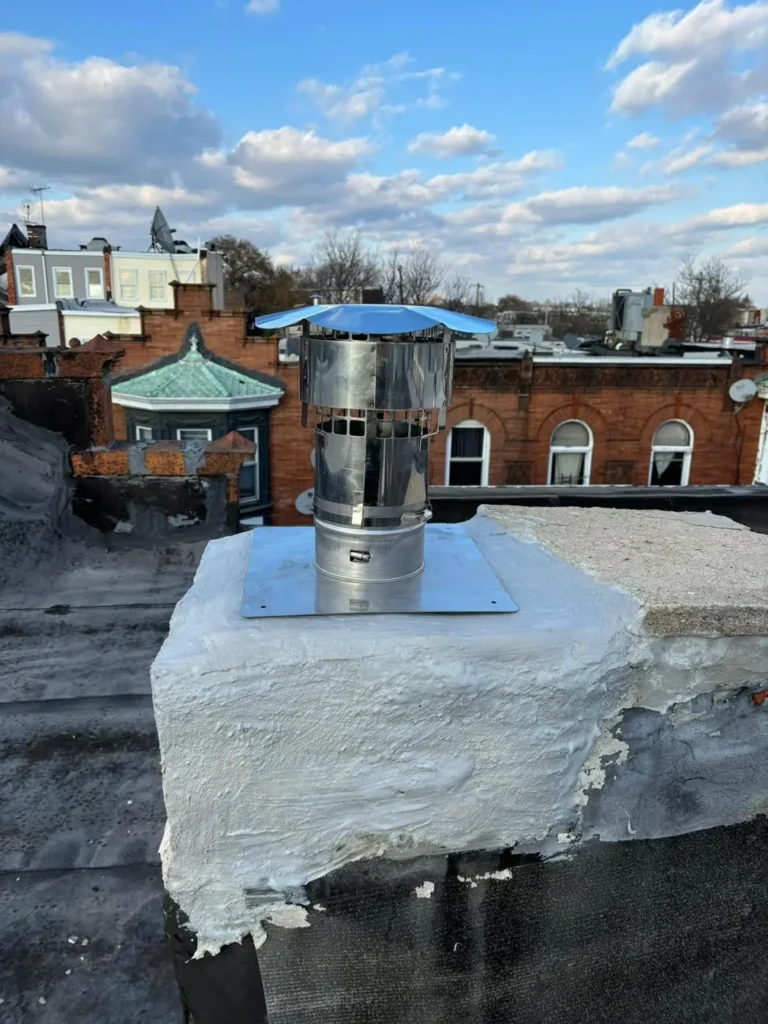
Chimney Liner Installation and Crown Repair in Mount Holly, NJ
Mount Holly, NJ · Chimney liner installation, crown repair
A chimney liner installed and the crown repaired in Mount Holly.
Read the project
Liner Installation, Two Crown Repairs and Two Chimney Caps in North Brunswick Township, NJ
North Brunswick Township, NJ · Chimney liner, two crown repairs, two chimney caps
A multi-part chimney project: liner, two crowns and two caps.
Read the projectQuestions
Frequently asked questions
Is a cracked crown urgent?
Usually not, but water damage builds, so it is worth fixing before winter.
Can I seal it myself?
Hairline cracks can be sealed with a product made for the purpose. Wider cracks, or work on the roof, are better left to someone with the equipment.
Does a new crown need a cap?
Most chimneys benefit from one, since it keeps rain and animals out of the flue.
How long does a crown last?
That depends on the mix, the build and the exposure. A well-formed crown with a good seal should last many years.
Ready to have your chimney looked at?
Call us, or send a scheduling request. We will contact you to confirm a time. Your appointment is not confirmed until we do.