Sweeping and maintenance
What is creosote?
Creosote is what wood smoke leaves behind when it cools in the flue. Its form tells you how much attention it needs.
Short answer. Creosote is a deposit left on flue walls when smoke cools and condenses. It can be crusty and flaky, tar-like and sticky, or shiny and hardened. The hardened glaze is the hardest to remove and the one to take most seriously.
How it forms
Wood smoke carries vapors, gases and particles. When that smoke meets a flue wall cooler than the smoke, part of it condenses and sticks. According to CSIA, creosote is a flammable by-product of burning wood, and buildup is worse when airflow is restricted, when wood is unseasoned and when the flue is cool.
The forms of creosote
| Form | What it looks like | What it suggests | Typical removal |
|---|---|---|---|
| Crusty, flaky | Dry soot that crumbles, black or gray | Routine buildup | Brushing and rotary cleaning |
| Tar-like, sticky | Dark, drippy, stringy | Cool burn or damp wood | A sweep; may need more than brushing |
| Shiny, hardened glaze | Glossy coating, often called glaze | Heavy buildup that is harder to remove and more flammable | CSIA says professional chemical treatment can change glazed creosote into a form a brush can remove |
The names vary between sources. What matters is what you see: dry and crumbly, wet and sticky, or hard and glossy.
What makes more of it
- Wood that has not dried. EPA guidance says to season wood for at least six months and burn it at under 20 percent moisture.
- A fire starved of air: stove dampered down, glass doors closed, damper only partly open.
- Overloading the firebox to stretch the burn.
- A flue that is too large or cold for the appliance, so smoke cools before it exits.
- A flue in poor repair, where gaps and cracks cool the exhaust.
What reduces it
- Burn dry, seasoned wood. A moisture meter gives a number.
- Give the fire enough air to burn hot rather than smolder.
- Keep the flue in good repair and sized for the appliance.
- Have the chimney inspected yearly so you know what is building up.
Why it matters
Creosote is highly combustible. When enough has built up and the flue gets hot enough, it can ignite and cause a chimney fire. The risk grows with the amount of deposit and with how hardened it is. It is also a reason deposits should be removed before a heavy burning season rather than after.
What to do if you see it
Do not try to scrape hardened deposits yourself. Stop using the fireplace and have the chimney inspected. A professional can tell what form you have and how to deal with it. If you suspect a fire has already happened, read after a chimney fire.
Common misconceptions
"Creosote only builds up in old chimneys." It builds up wherever smoke cools in the flue. How you burn matters more than how old the chimney is.
"If I cannot smell it, it is not there." The smell grows stronger in humid weather, but deposits can be present without it.
"A gas fireplace makes creosote." It does not. The creosote described here comes from burning wood and oil.
Sources
- CSIA, homeowner FAQs: creosote and fireplace odor
- EPA Burn Wise, best wood burning practices (archived)
About this guide. Published by Dr. Sweeper as general homeowner education, last updated October 1, 2026. Sources are linked where they are cited. What applies to your home can depend on your local building code, your appliance and its manufacturer's instructions, and the actual condition of your chimney, so this guide is not a substitute for an inspection.
If you need help
Related services
Chimney sweep
Cleaning of the flue and firebox.
Learn moreChimney inspection
A condition check of the chimney system.
Learn moreChimney liners
Liner options for the flue.
Learn moreFireplace Cleaning
From the firebox up through the flue.
Learn moreAfter a Chimney Fire
Is the flue safe to use again?
Learn moreWood Stove Cleaning
Stove, connector pipe and flue.
Learn moreOur work
Related project work
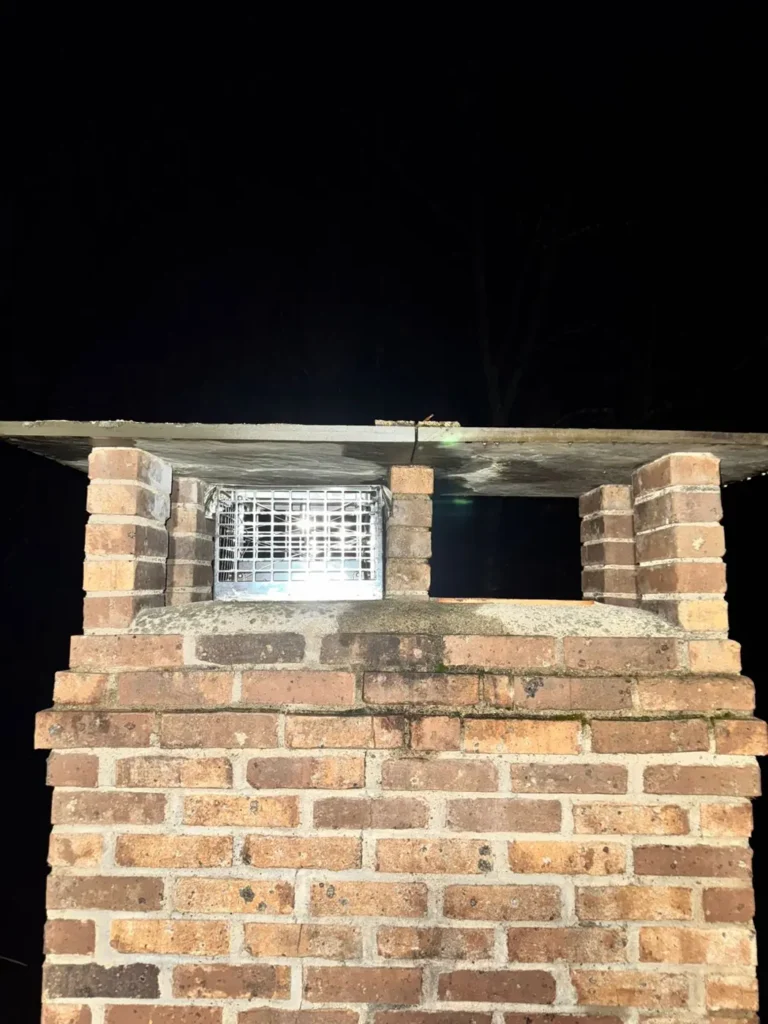
Damper Cap Installation and Two Fireplace Cleanings in Wanaque, NJ
Wanaque, NJ · Damper cap installation, fireplace cleaning
A damper cap installed and two fireplaces cleaned in Wanaque.
Read the project
Firebox Panel Replacement and Chimney Sweep in Denville, NJ
Denville, NJ · Firebox panel replacement, chimney sweep
A replacement firebox panel and chimney sweeping in Denville.
Read the projectQuestions
Frequently asked questions
Is creosote dangerous?
It is flammable. In quantity, and with enough heat in the flue, it can ignite. That is why deposits are removed and burning habits matter.
Can I remove it myself?
Light, crusty deposits are routine for a professional sweep. Hardened glaze should not be scraped at home.
Is the smell a sign of too much creosote?
It can be. A strong tarry smell, especially in humid weather, is a reason to have the flue looked at.
Do wood stoves make more of it?
They can. Smaller flues and cooler exhaust often leave more deposit, so they are worth checking more often.
Ready to have your chimney looked at?
Call us, or send a scheduling request. We will contact you to confirm a time. Your appointment is not confirmed until we do.